What is consumed from us
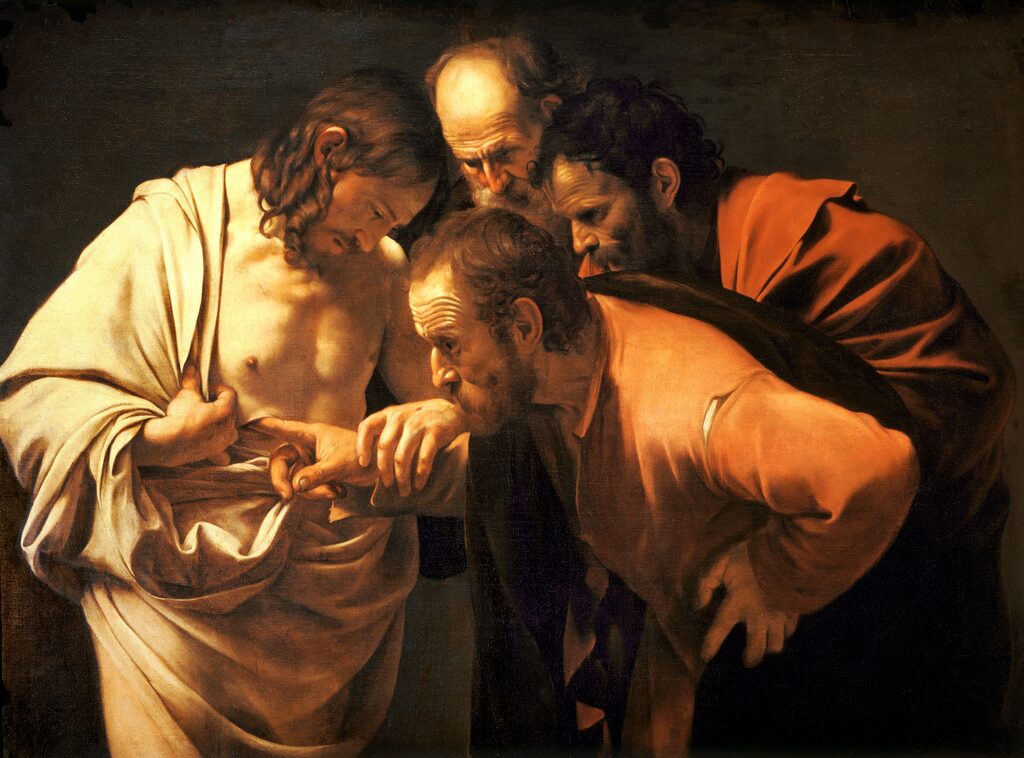
Caravaggio, The Incredulity of Saint Thomas, 1601 to 1602. Bildergalerie, Sanssouci, Potsdam.
He was not asked to feel convinced. He was told to put his hand in the wound.
Wikimedia Commons · Public domain
A student's data leaves the building every period. Catechesis has almost nothing to say about where it goes.
Purity online gets a parent night. Screen time gets a policy. Who holds a student's data, what they agreed to at signup, and what is being guessed about them tonight gets neither. Catholic schools inherited a careful vocabulary for the first two subjects and almost none for the third.
Three layers of a student's data
Nobody typed layer three. It is guessed. A system that has watched a student long enough will estimate their faith, their politics, and their state of mind, and the estimate does not have to be true to be sold. That guess, not what they posted, decides what they see next. No one showed it to them, and nothing they agreed to was written to be understood.
What the Church actually says
The Catechism handles privacy under the eighth commandment, in among truth and reputation.
A few lines earlier it deals with being asked for something you are not obliged to hand over.
Read that second line next to a permissions dialog. An app asking for the contact list is asking for the truth about other people, most of whom have never heard of it, and it does not have the right to know. Refusing is not paranoia or rudeness. It is reserve, which the Church already asked of us, pointed at a screen.
The method, applied here
- Pray"Lord, give us eyes to see what is invisible."Thirty seconds, before the install rather than after it.
- ObserveOpen the permissions screen and read it. Not the policy, the permissions.iPhone: Settings, Privacy & Security. Android: Settings, Privacy, Permission Manager.
- AnalyzeWho pays for this, and what do they get?If nobody is charged, the ledger balances somewhere else.
- ReflectDoes this treat my student as a person or as a source?Would I want this asked of my own child?
- ActGrant it, narrow it, refuse it, or replace it.
The parish is also collecting
Everything above happens on the student's own phone. A parish or school runs a collection of its own: the student information system, the learning platform, the photo release buried in the September packet, the livestreamed Mass that puts a first communicant's face on a public channel, the class account that posts names alongside faces. Before the next platform is adopted, somebody should be able to say where the data sits, who else can read it, and what becomes of it when a family leaves. If nobody in the building can answer that, it is the same problem, only now we are the ones holding it.
This site is also collecting
The same three questions, answered for the page you are reading. What it counts: which pages are read, in which language, and a handful of named moments, an email joined the list, an exercise was marked done, a worksheet was printed. The counting keeps no cookie and sets no identifier that survives the tab; close it and you are a stranger again. Signing in uses the shared account of our sister site Saint for a Minute: one email address, a six-digit code, no password, and the same account on both sites. What this site keeps against it: your own record of the exercises, the date and the line you chose to keep. No name, no phone, no location, no advertising, nothing sold or shared. The delete button on Your Practice removes everything this site holds, including your address from the mailing list, at once.
The information security triad
Permission Review
Twenty minutes with the student and their phone, covering every app installed since last month. Three questions per permission: does it need this to work, did you knowingly grant it, and what actually breaks if you turn it off. The worksheet has the table.
Family Tech Sabbath
One day with the platforms off and the notifications off rather than merely silenced. Anchor it to a date already on the calendar, Pentecost or the first Sunday of Advent, so it does not get renegotiated every quarter.
Sharing Examen
Before posting anyone else's face, name, or words, ask whether they agreed to it. The Catechism puts a floor under this: private information prejudicial to another is not to be divulged without a grave and proportionate reason (2491). A class photo on a parish account is somebody else's child.
Lo que se consume de nosotros
Caravaggio, La incredulidad de santo Tomás, 1601 a 1602. Bildergalerie, Sanssouci, Potsdam.
No le pidieron que se sintiera convencido. Le dijeron que metiera la mano en la herida.
Wikimedia Commons · Public domain
Los datos de un estudiante salen del edificio cada hora de clase. La catequesis casi no tiene nada que decir sobre adónde van.
La pureza en línea tiene su noche de padres. El tiempo de pantalla tiene su reglamento. Quién guarda los datos de un estudiante, qué aceptó al registrarse y qué se está deduciendo de él esta noche no tiene ninguno de los dos. Las escuelas católicas heredaron un vocabulario cuidadoso para los dos primeros temas y casi ninguno para el tercero.
Tres capas de los datos de un estudiante
La capa tres nadie la escribió. Se adivina. Un sistema que ha observado a un estudiante el tiempo suficiente deducirá su fe, su tendencia política y su salud mental, y esa deducción no tiene que ser cierta para venderse. Esa misma deducción, y no lo que publicó, decide lo que verá a continuación. Nadie se la mostró, y nada de lo que aceptó estaba escrito para ser entendido.
Lo que el Catecismo dice de verdad
El Catecismo trata la privacidad dentro del octavo mandamiento, entre la verdad y la reputación.
Unas líneas antes se ocupa de que a uno le pidan algo que no está obligado a entregar.
Lee esa segunda línea junto a un cuadro de permisos. Una aplicación que pide la lista de contactos está pidiendo la verdad sobre otras personas, la mayoría de las cuales jamás han oído hablar de ella, y no tiene derecho a conocerla. Negarse no es paranoia ni mala educación. Es la reserva que la Iglesia ya nos pedía, dirigida a una pantalla.
El método, aplicado aquí
- Ora"Señor, danos ojos para ver lo invisible."Treinta segundos, antes de instalar y no después.
- ObservaAbre la pantalla de permisos y léela. No la política, los permisos.iPhone: Ajustes, Privacidad y Seguridad. Android: Ajustes, Privacidad, Administrador de permisos.
- Analiza¿Quién paga esto y qué recibe a cambio?Si a nadie se le cobra, la cuenta se salda en otra parte.
- Reflexiona¿Esto trata a mi estudiante como persona o como fuente de datos?¿Querría yo que se lo pidieran a mi propio hijo?
- ActúaConcédelo, redúcelo, recházalo o sustitúyelo.
La parroquia también recopila
Todo lo anterior ocurre en el teléfono del propio estudiante. Una parroquia o una escuela mantiene su propia recopilación: el sistema de información estudiantil, la plataforma de aprendizaje, la autorización de fotos enterrada en el paquete de septiembre, la Misa transmitida que pone el rostro de un niño de primera comunión en un canal público, la cuenta del salón que publica nombres junto a caras. Antes de adoptar la próxima plataforma, alguien debería poder decir dónde están los datos, quién más puede leerlos y qué pasa con ellos cuando una familia se va. Si nadie en el edificio sabe responder eso, es el mismo problema, solo que ahora lo tenemos nosotros en las manos.
Este sitio también recopila
Las mismas tres preguntas, respondidas para la página que estás leyendo. Lo que cuenta: qué páginas se leen, en qué idioma, y unos pocos momentos con nombre, un correo se unió a la lista, un ejercicio se marcó como hecho, una hoja se imprimió. El conteo no guarda ninguna cookie ni fija identificador alguno que sobreviva a la pestaña; ciérrala y vuelves a ser un desconocido. Entrar usa la cuenta compartida de nuestro sitio hermano Saint for a Minute: una dirección de correo, un código de seis dígitos, sin contraseña, y la misma cuenta en ambos sitios. Lo que este sitio guarda con ella: tu propio registro de los ejercicios, la fecha y la línea que decidiste guardar. Sin nombre, sin teléfono, sin ubicación, sin publicidad, nada se vende ni se comparte. El botón de borrar en Tu Práctica elimina todo lo que este sitio guarda, incluida tu dirección de la lista de correo, de una vez.
La tríada de seguridad de la información
Revisión de Permisos
Veinte minutos con el estudiante y su teléfono, repasando cada aplicación instalada desde el mes pasado. Tres preguntas por permiso: ¿lo necesita para funcionar?, ¿lo concediste a sabiendas?, ¿qué deja de funcionar de verdad si lo apagas? La hoja de trabajo trae la tabla.
Sabbath Tecnológico
Un día con las plataformas apagadas y las notificaciones apagadas, no solo en silencio. Fíjalo a una fecha que ya esté en el calendario, Pentecostés o el primer domingo de Adviento, para no tener que negociarlo cada trimestre.
Examen del Compartir
Antes de publicar el rostro, el nombre o las palabras de otra persona, pregunta si esa persona lo aceptó. El Catecismo pone un piso a esto: las informaciones privadas perjudiciales al prójimo no deben ser divulgadas sin una razón grave y proporcionada (2491). Una foto del salón en la cuenta de la parroquia es el hijo de alguien más.