Pray.
A discernment you can carry and teach.
In forty three seconds
Five paintings and five sentences. No sound, so it plays anywhere.
Transcript
- Move 1 · PrayNothing gets touched until prayer has named the moment.Jean-François Millet, The Angelus, 1857 to 1859
- Move 2 · ObserveDescribe what is in front of you. Do not judge it yet.Johannes Vermeer, The Astronomer, 1668
- Move 3 · AnalyzeWhat is this tool optimizing for, and with whose data?Antonello da Messina, Saint Jerome in His Study, about 1475
- Move 4 · ReflectWhat does Christ ask of me here?Georges de La Tour, The Magdalen with the Smoking Flame, about 1640
- Move 5 · ActUse, modify, refuse, replace, or witness.Vincent van Gogh, The Good Samaritan, 1890
- AI must serve human intelligence, never replace it.
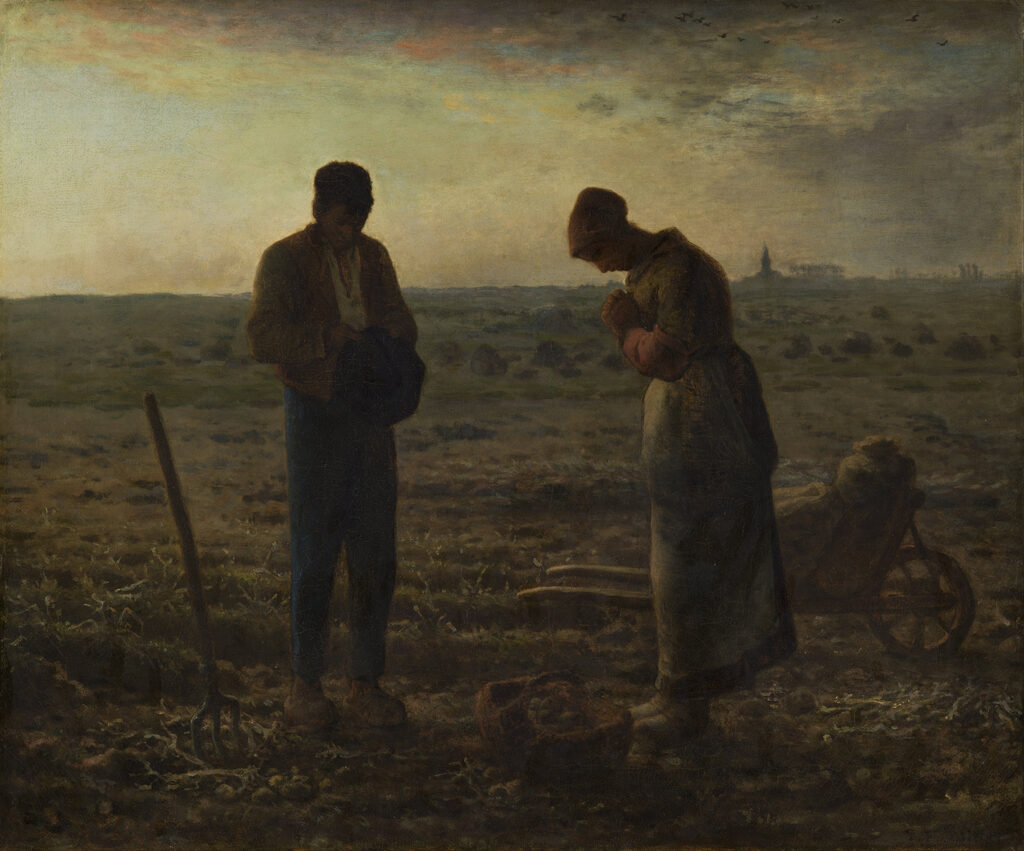
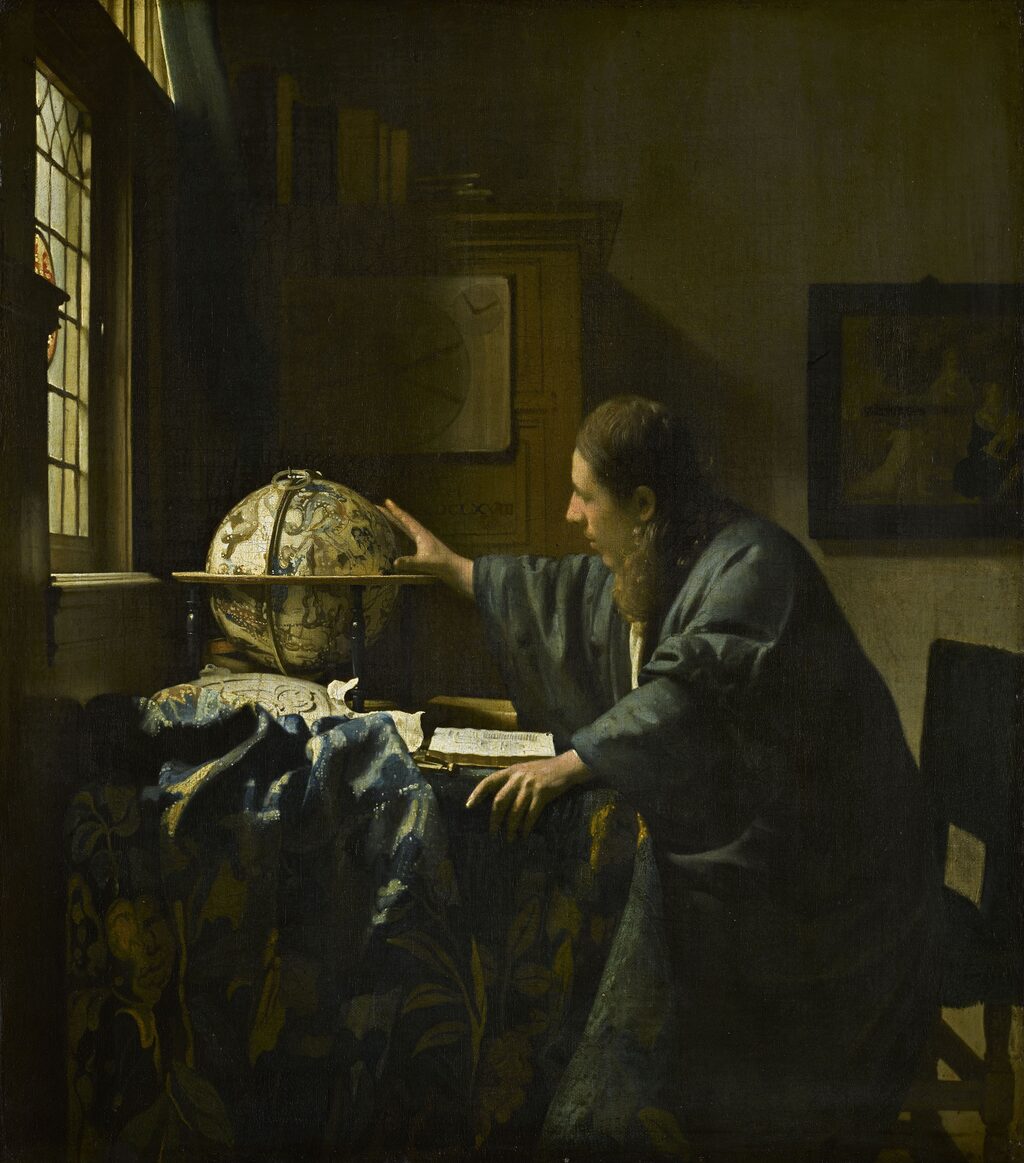
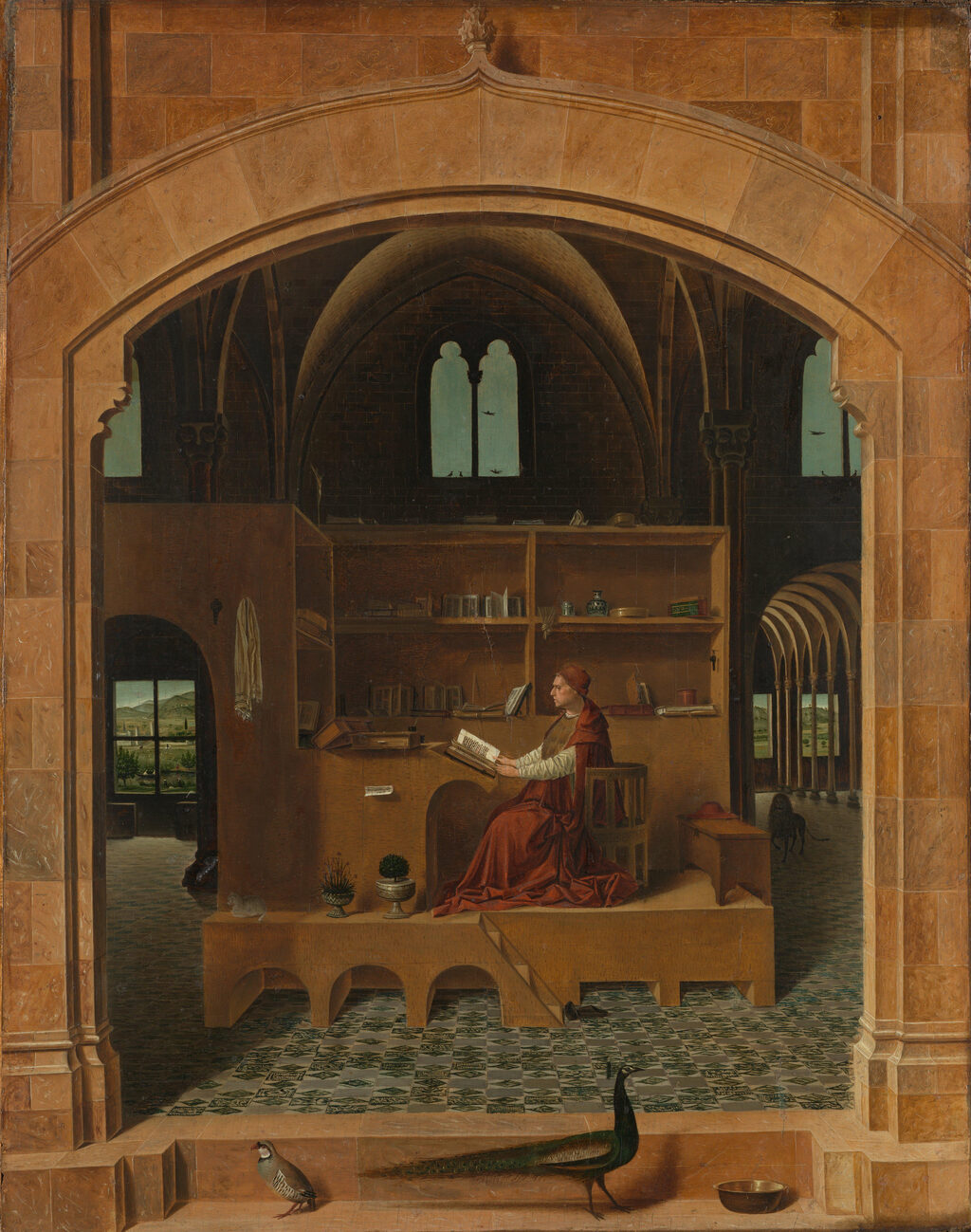
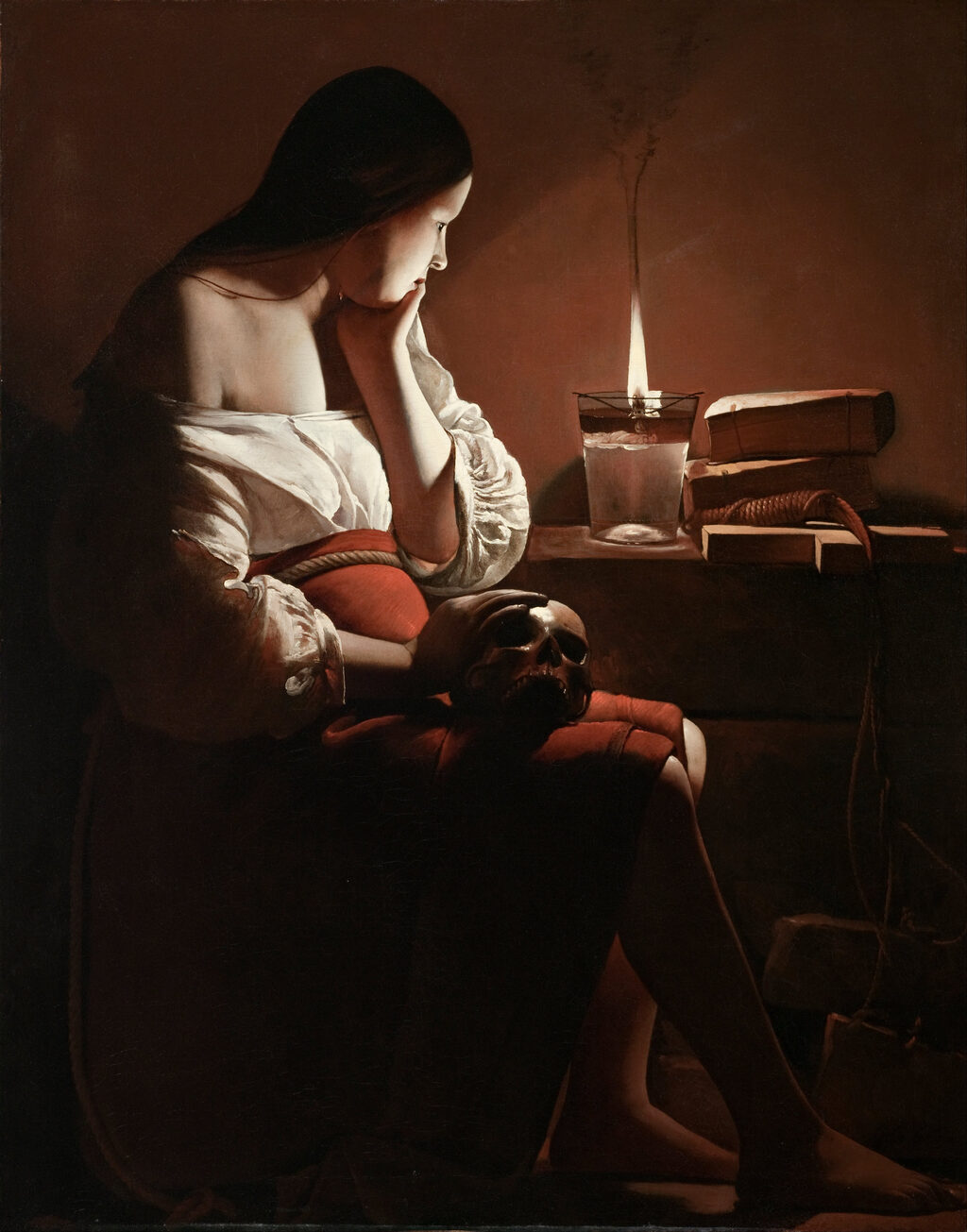
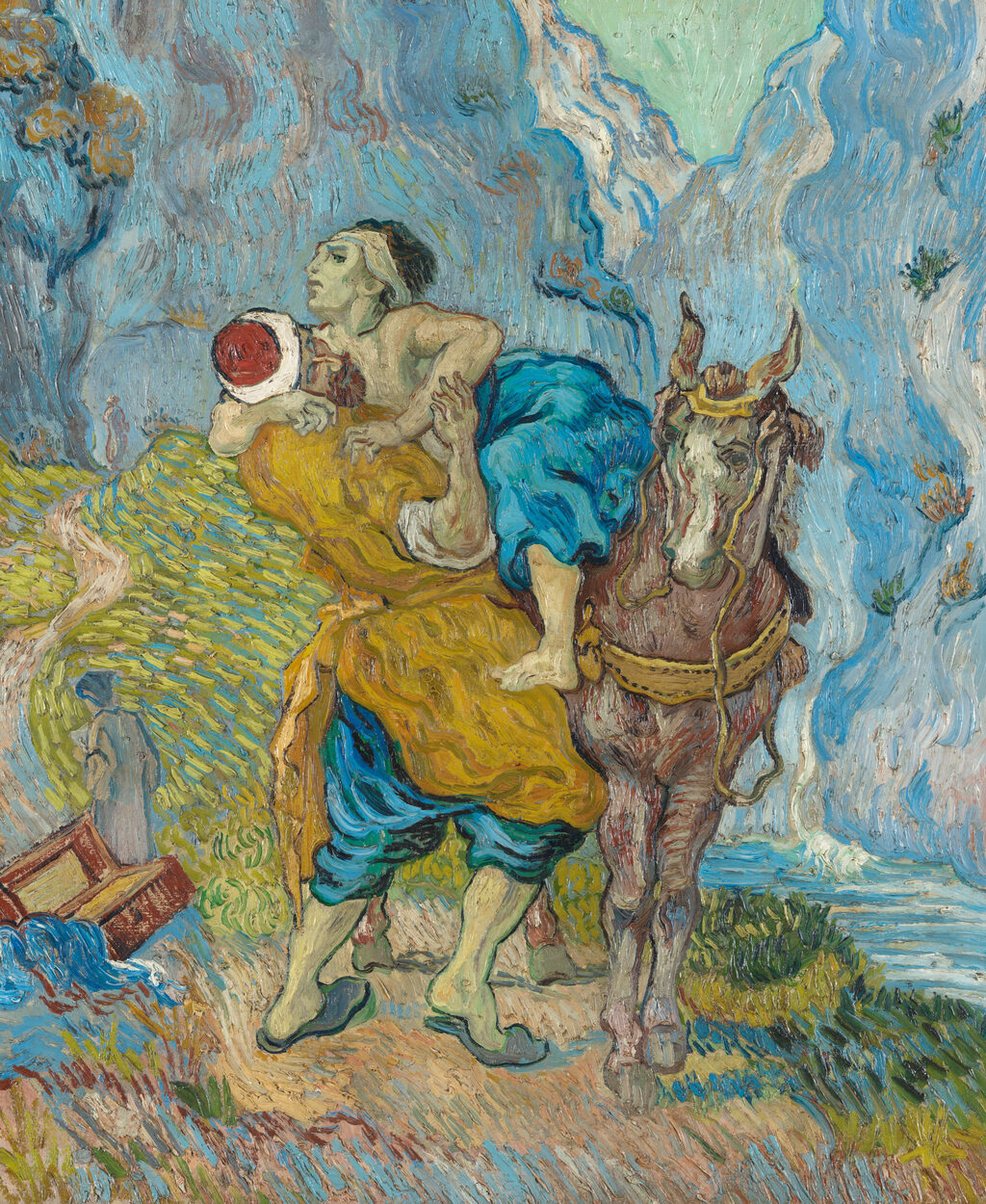
Five paintings, one for each move. Full credits are in The Pictures.
- 1 · Pray open"Lord, give me eyes to see what is in front of me." Nothing gets touched until prayer has named the moment. Thirty seconds is enough.
- 2 · ObserveWhat is happening? What does the screen ask of me? Just describe. Do not judge yet.
- 3 · AnalyzeWhat is the tool optimizing for? Whose data is it using? Ask an AI its idea of "saint," of "Catholic." You may be surprised.
- 4 · ReflectWhat does Christ ask of me here? What would I want my own child to do here?
- 5 · Pray & Actclose, then respondThe closing prayer hands the work back to God. Then act: use, modify, refuse, replace, or witness.
Why prayer sits on both ends
Discernment without prayer is panic. Action without prayer is performance.
The teaching underneath
- DignityThe human person is the measure of every tool. Antiqua et Nova (2025), the Church's note on AI.
- TruthVerify before you teach. Reserve before you reveal. Catechism 2488–2492, applied in Information Security.
- Common goodAn algorithm optimizes for engagement. The Church asks what the tool does to the person, and to the community the person belongs to. The whole method runs on those two questions.
The Church already had this method
The method is not a new invention. In 1961 John XXIII set out how the Church turns a social principle into something a person actually does: "There are three stages which should normally be followed in the reduction of social principles into practice. First, one reviews the concrete situation; secondly, one forms a judgment on it in the light of these same principles; thirdly, one decides what in the circumstances can and should be done to implement these principles. These are the three stages that are usually expressed in the three terms: look, judge, act." He adds, in the next line, that "it is important for our young people to grasp this method and to practice it." Mater et Magistra 236 and 237.
- LookObserve. Describe the concrete situation before judging it. Move 2.
- JudgeAnalyze, then reflect. Hold what you described against what the Church actually teaches. Moves 3 and 4.
- ActDecide what can and should be done here, and do it. Move 5.
What this method adds is the prayer at both ends. That is ours, not the encyclical's, and it is added for a reason: looking, judging and acting can all be done briskly and badly by someone in a hurry, and thirty seconds of prayer is the cheapest available cure for hurry.
The principles the judging uses
"Judge" is not a mood. The Church names four permanent principles at the heart of its social doctrine, and each one asks a question a screen can be held to. Compendium of the Social Doctrine of the Church 160.
- Human dignityIs the person here an end, or the thing being sold? A tool that treats attention as inventory has already answered. Compendium 160.
- The common goodThis tool is optimized for something. Is what it optimizes for the good of the people using it, or only the good of whoever built it? Compendium 164 to 170.
- SubsidiarityDecisions belong at the level closest to the person. A default written by a distant company, and never chosen by this family, has taken a decision that was not its own to take. Compendium 185 to 188.
- SolidarityThe feed is tuned to me. Solidarity asks what it is doing to the person on the other end of what I share, and to everyone who cannot leave. Compendium 192 to 196.
Participation follows from subsidiarity rather than standing beside it: the Church calls it "the characteristic implication of subsidiarity", which is the difference between a family that chose its own settings and a family that was handed them. Compendium 189. The whole ladder of this teaching, from human dignity up to a civilization of love, is drawn out in The Golden Ladder.
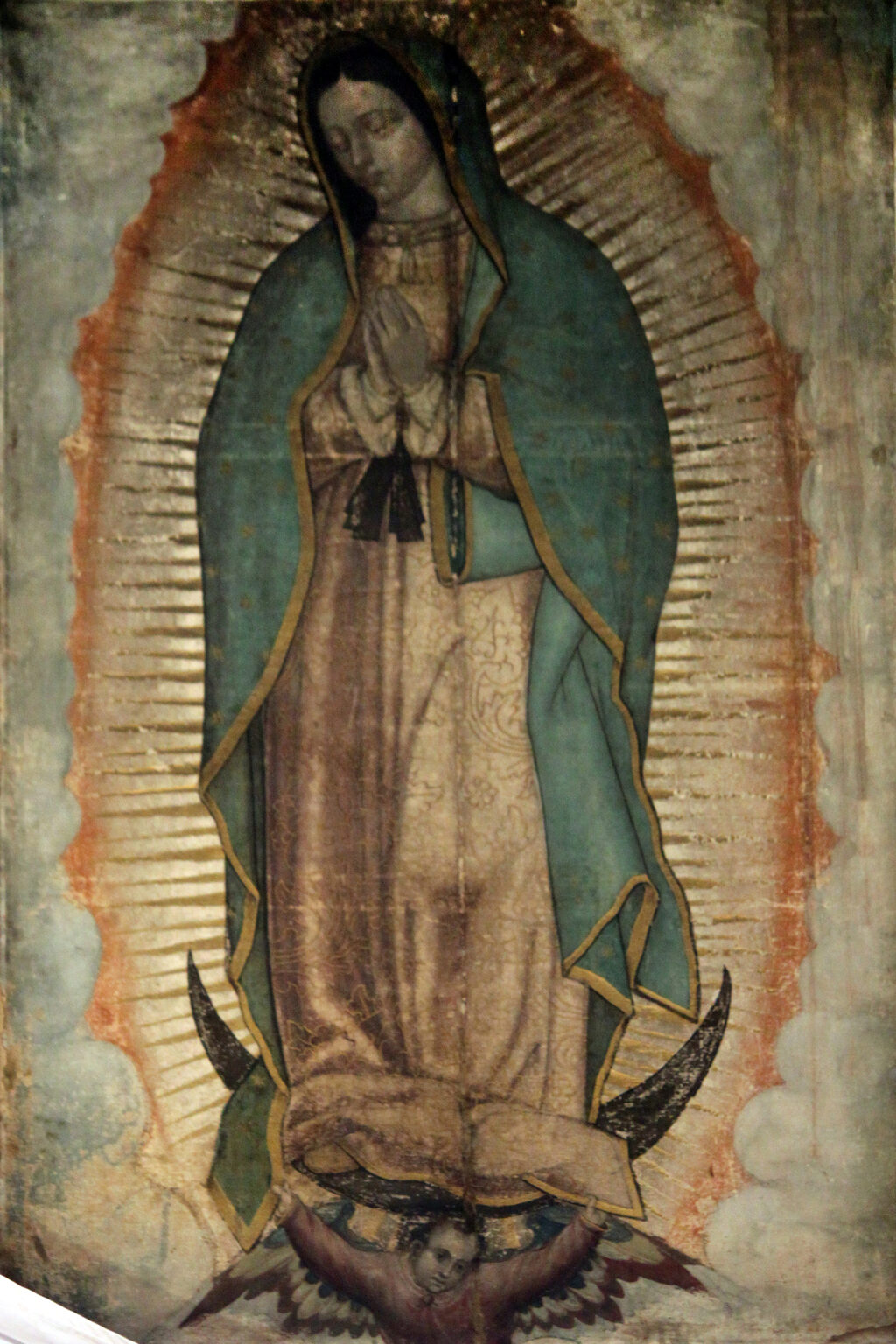
Unknown (tradition holds the image was not made by human hands), Our Lady of Guadalupe, the tilma of Saint Juan Diego, 1531. Basilica of Our Lady of Guadalupe, Mexico City.
The message that reached the Americas came as an image, in the signs and the language of the man who received it, and he was poor.
Wikimedia Commons · Public domain
The Church saw this coming
Pope Francis named the condition this method answers:
He named the failure mode inside the Church too: even in Catholic media, "defamation and slander can become commonplace" (115). The method is a discipline for exactly that world.
Orar.
Un discernimiento que puedes llevar y enseñar.
En cuarenta y tres segundos
Cinco pinturas y cinco frases. Sin sonido, para que se pueda ver en cualquier parte.
Transcripción
- Paso 1 · OrarNo se toca nada hasta que la oración haya nombrado el momento.Jean-François Millet, El Ángelus, 1857 a 1859
- Paso 2 · ObservarDescribe lo que tienes delante. Todavía no lo juzgues.Johannes Vermeer, El astrónomo, 1668
- Paso 3 · Analizar¿Para qué está optimizada esta herramienta, y con datos de quién?Antonello da Messina, San Jerónimo en su estudio, hacia 1475
- Paso 4 · Reflexionar¿Qué me pide Cristo en este momento?Georges de La Tour, La Magdalena de la llama humeante, hacia 1640
- Paso 5 · ActuarUsar, modificar, rechazar, reemplazar o dar testimonio.Vincent van Gogh, El buen samaritano, 1890
- La IA debe servir a la inteligencia humana, nunca reemplazarla.
Cinco pinturas, un paso cada una. Los créditos completos están en Las pinturas.
- 1 · Orar abrir"Señor, dame ojos para ver lo que tengo delante." No se toca nada hasta que la oración haya nombrado el momento. Treinta segundos bastan.
- 2 · Observar¿Qué está pasando? ¿Qué me pide la pantalla? Solo describe. Todavía no juzgues.
- 3 · Analizar¿Para qué está optimizada la herramienta? ¿De quién usa los datos? Pregúntale a una IA su idea de "santo," de "católico." Puede sorprenderte.
- 4 · Reflexionar¿Qué me pide Cristo en este momento? ¿Qué querría yo que hiciera mi propio hijo aquí?
- 5 · Orar y Actuarcerrar, luego responderLa oración final devuelve la obra a Dios. Luego actúa: usar, modificar, rechazar, reemplazar o dar testimonio.
Por qué la oración está en ambos extremos
El discernimiento sin oración es pánico. La acción sin oración es espectáculo.
La enseñanza debajo
- DignidadLa persona humana es la medida de toda herramienta. Antiqua et Nova (2025), la nota de la Iglesia sobre la IA.
- VerdadVerifica antes de enseñar. Reserva antes de revelar. Catecismo 2488–2492, aplicado en Seguridad de la Información.
- Bien comúnUn algoritmo optimiza para la interacción. La Iglesia pregunta qué hace la herramienta a la persona, y a la comunidad a la que pertenece. Todo el método corre sobre esas dos preguntas.
La Iglesia ya tenía este método
El método no es un invento nuevo. En 1961 Juan XXIII expuso cómo la Iglesia convierte un principio social en algo que una persona hace de verdad: "los principios generales de una doctrina social se llevan a la práctica comúnmente mediante tres fases: primera, examen completo del verdadero estado de la situación; segunda, valoración exacta de esta situación a la luz de los principios, y tercera, determinación de lo posible o de lo obligatorio para aplicar los principios de acuerdo con las circunstancias de tiempo y lugar. Son tres fases de un mismo proceso que suelen expresarse con estos tres verbos: ver, juzgar y obrar." Y añade, en la línea siguiente, la suma conveniencia de que los jóvenes aprendan este método y lo practiquen. Mater et Magistra 236 y 237.
- VerObservar. Describir la situación concreta antes de juzgarla. Paso 2.
- JuzgarAnalizar y luego reflexionar. Contrastar lo descrito con lo que la Iglesia enseña de verdad. Pasos 3 y 4.
- ObrarDeterminar lo posible y lo obligatorio aquí, y hacerlo. La encíclica dice "obrar"; el quinto paso lo llama actuar. Paso 5.
Lo que este método añade es la oración en los dos extremos. Eso es nuestro, no de la encíclica, y se añade por una razón: ver, juzgar y actuar se pueden hacer rápido y mal, y treinta segundos de oración son el remedio más barato que existe contra la prisa.
Los principios que usa el juzgar
"Juzgar" no es un estado de ánimo. La Iglesia nombra cuatro principios permanentes en el corazón de su doctrina social, y cada uno hace una pregunta a la que una pantalla puede responder. Compendio de la Doctrina Social de la Iglesia 160.
- Dignidad humana¿La persona es aquí un fin, o es lo que se vende? Una herramienta que trata la atención como inventario ya respondió. Compendio 160.
- Bien comúnEsta herramienta está optimizada para algo. ¿Ese algo es el bien de quienes la usan, o solo el de quien la construyó? Compendio 164 a 170.
- SubsidiariedadLas decisiones pertenecen al nivel más cercano a la persona. Una configuración predeterminada escrita por una empresa lejana, y nunca elegida por esta familia, tomó una decisión que no le tocaba. Compendio 185 a 188.
- SolidaridadEl feed está afinado para mí. La solidaridad pregunta qué le hace a la persona que está al otro lado de lo que comparto, y a todos los que no pueden irse. Compendio 192 a 196.
La participación no está al lado de la subsidiariedad sino que brota de ella: la Iglesia la llama "la implicación característica de la subsidiariedad", que es la diferencia entre una familia que eligió su propia configuración y una a la que se la entregaron. Compendio 189. Toda la escalera de esta enseñanza, desde la dignidad humana hasta la civilización del amor, está desplegada en La Escalera Dorada.
Anónimo (la tradición sostiene que la imagen no fue hecha por mano humana), Nuestra Señora de Guadalupe, la tilma de san Juan Diego, 1531. Basílica de Nuestra Señora de Guadalupe, Ciudad de México.
El mensaje que llegó a las Américas vino como imagen, en los signos y la lengua del hombre que lo recibió, y él era pobre.
Wikimedia Commons · Public domain
La Iglesia lo vio venir
El Papa Francisco nombró la condición que este método responde:
Y nombró también el fallo dentro de la Iglesia: aun en medios católicos "se toleran la difamación y la calumnia" (115). El método es una disciplina para ese mundo exacto.